- Marine & Chris ➡️ MC2 Ventures
- Posts
- Bitcoin is the Only Truly Decentralized Asset - And That's a Problem
Bitcoin is the Only Truly Decentralized Asset - And That's a Problem
Bitcoin has no office. No team. No roadmap. In DeFi, we call many things "decentralized." But are they really?

Christoph Richter
February 15, 2025
Uniswap’s governance vote to deploy on Base chain passed with just 41 million votes. Sounds like a lot? The total supply is 1 billion tokens. That’s 4% participation. The same week, three addresses controlled that deployment decision for billions in user funds.
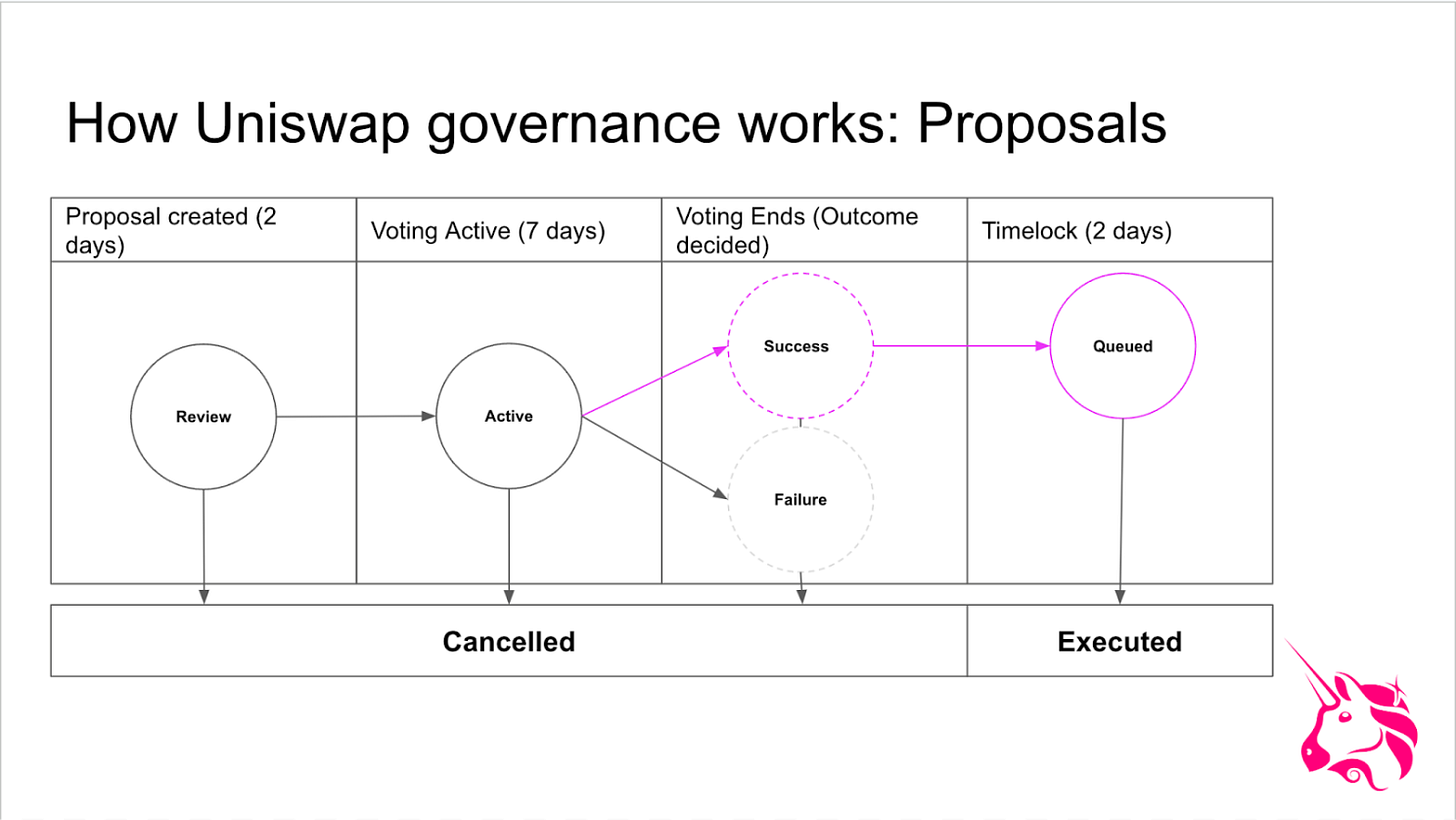
Uniswap’s governance
This pattern repeats across DeFi. Compound’s largest governance vote in 2015 saw 7% turnout. Aave’s critical parameter changes often come from the same five addresses. Even newer protocols like Arbitrum rely on foundation teams for key decisions.
The stark reality of DeFi governance:
89% of protocols can freeze user funds through admin keys
Foundation teams hold override capabilities in 9 of 10 DAOs
The average governance proposal in 2024 sees less than 3% voter participation
Bitcoin achieved something unique: true absent leadership. Satoshi vanished. The community rejected even minor changes like block size increases. No other protocol has replicated this. Not because they can’t, but because they won’t.
We’re building financial protocols worth billions on foundations of sand. The question isn’t whether DeFi is decentralized — it’s whether it ever intended to be.
How did Bitcoin achieve absolute decentralisation?
Satoshi could have made millions. Could have kept a massive founder allocation. Could have stayed to guide Bitcoin’s development. Instead, they disappeared.
This wasn’t just humble — it was revolutionary. Bitcoin’s genesis block was mined in 2009 with zero premine, zero venture funding, and zero team tokens. Even the earliest adopters had to mine or buy their coins, just like everyone else.
The 2017 block size wars proved Bitcoin’s resistance to change. Despite pressure from major exchanges, mining pools, and industry leaders, the network rejected block size increases. Why? Because no single entity could force it.
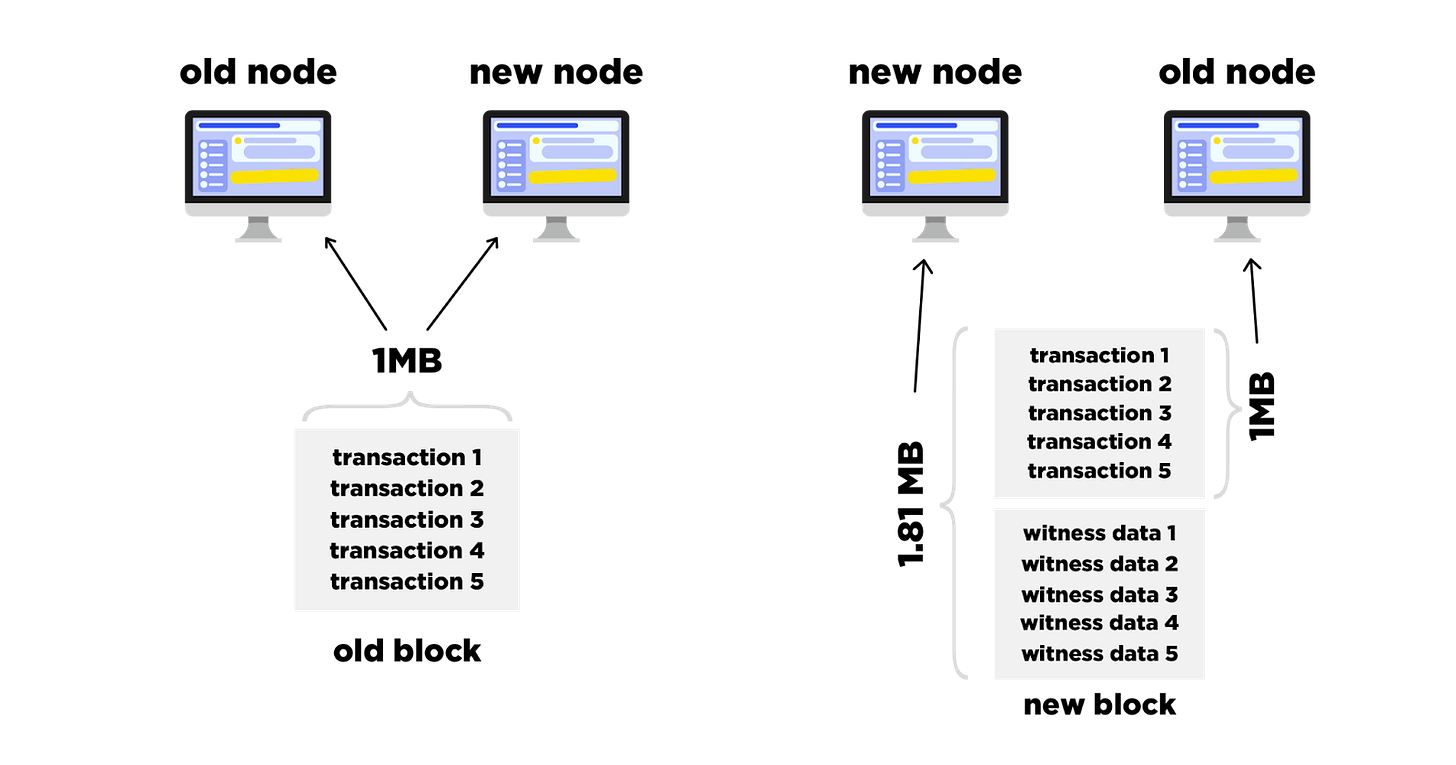
Block sizes on Bitcoin
Compare this to DeFi now:
Key protocol ownership patterns:
Uniswap V4: 40% controlled by founding team and investors
Curve: 30% of voting power in three whale addresses
Aave: Governance supermajority requires just 15 addresses
Bitcoin’s security comes from math, not meetings. Proof-of-work isn’t just a consensus mechanism — it’s a guarantee against centralized control. You can’t vote to change physics. You can’t persuade electricity to cost less. The rules are the rules.
When Binance’s CZ suggested recovering stolen funds through a Bitcoin rollback in 2019, the community didn’t even dignify it with a vote. It was impossible then. It’s impossible now. That’s real decentralization.
So, is decentralisation in DeFi a myth?
In 2015, Ethereum promised decentralized finance. Look closer at 2025’s reality. The emperor has no clothes.
Take USDC and USDT — DeFi’s foundation. Circle froze 63 million USDC addresses in 2023 alone. Tether can blacklist any wallet instantly. These aren’t decentralized tools. They’re centralized choke points with smart contracts.
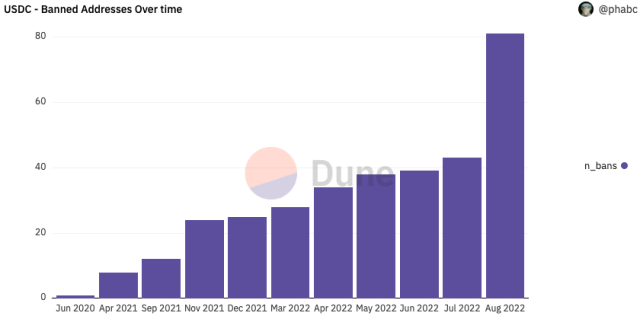
USDC banned addresses
MakerDAO tells an even stranger story. Their “decentralized” stablecoin DAI is now backed by 80% real-world assets. US Treasury bills. Corporate bonds. Traditional bank deposits. The protocol that started DeFi now depends entirely on the traditional financial system.
Follow the money in major DeFi protocols:
78% have majority ownership by VCs and founding teams
92% can upgrade contracts through multisig controls
85% of governance tokens are concentrated in fewer than 100 wallets
In 1929, three banks controlled Wall Street’s fate. In 2025, three addresses control most DeFi protocols. We didn’t eliminate power concentration. We just moved it to a blockchain.
The hard truth? Today’s DeFi looks more like traditional finance than most want to admit. The only difference is the technology stack. The centralization remains — it’s just wearing a new mask.
What happens if Bitcoin becomes the last truly decentralized asset?
We’re watching the end of an era. Bitcoin stands alone — truly permissionless, genuinely decentralized. Everything else is moving in the opposite direction.
Last year, the SEC approved Bitcoin ETFs first. Why? Because there’s no team to regulate. No foundation to subpoena. No developers to pressure. While DeFi protocols scramble to become “compliant,” Bitcoin remains unchanged.
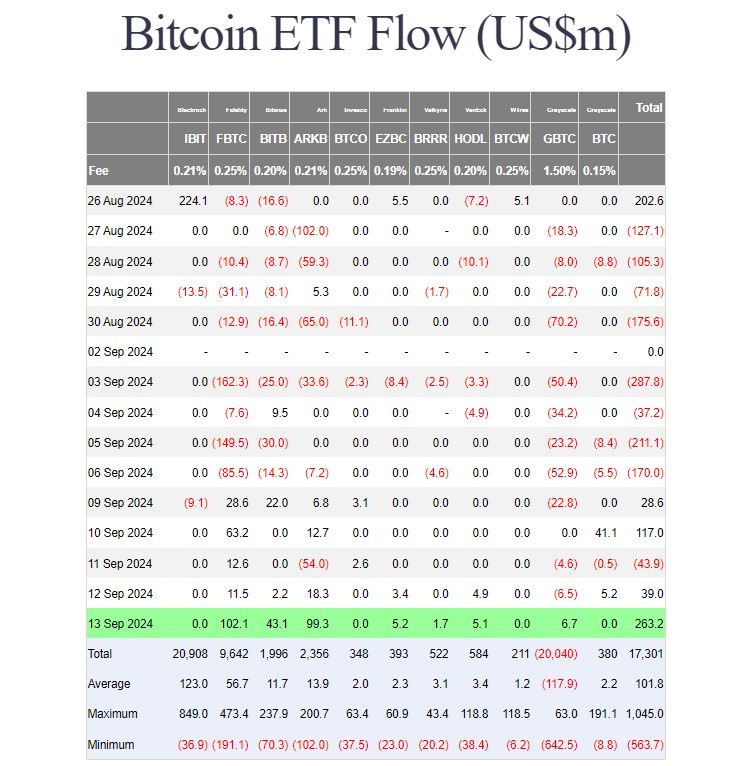
Growth of Bitcoin ETFs
Out of 100 top crypto projects launched since 2015, only Bitcoin has:
- Zero ability to freeze funds
- No team-controlled treasury
- No governance mechanism to change core rules
- No reliance on external systems
This isn’t a failure of DeFi. It’s evolution. Most protocols are choosing regulatory compliance over decentralization. They’re building bridges to traditional finance, not replacements for it.
Bitcoin operates as the world’s neutral settlement layer. DeFi becomes a regulated interface layer above it. Not good or bad — just different. The technology stays revolutionary. The governance becomes traditional.
Decentralization was never the goal for most projects. It was marketing. The real innovation was programmable finance. Bitcoin proved true decentralization is possible. But the market is deciding if it’s profitable.
The question isn’t whether DeFi will survive. It’s whether it will admit what it’s becoming: a more efficient version of traditional finance, not a replacement for it. Perhaps that’s enough.
Money printing reshaped markets more than most realize.
But what happens when AI meets DeFi?
We’re building exactly that at MC² Finance — turning complex DeFi strategies into regulated ETPs, powered by AI.